Introduction to AI Models in Fashion
The fashion industry is experiencing a digital revolution, and at the forefront of this transformation are AI-generated models. These synthetic personalities are reshaping how brands approach marketing in two of the most image-conscious sectors: lingerie and fitness. Unlike traditional models, AI influencers offer unprecedented control, consistency, and creative possibilities that are revolutionizing brand storytelling.
In the lingerie and fitness industries, where body image, diversity, and aspirational messaging play crucial roles, AI models provide unique solutions to age-old marketing challenges. They offer brands the ability to create diverse, inclusive campaigns while maintaining complete creative control over their brand ambassadors.
Key Market Statistics
- The global lingerie market is valued at over $42 billion annually
- Fitness influencer marketing represents a $1.7 billion segment
- AI model adoption in fashion has grown by 300% in the past two years
- Virtual influencers generate 3x higher engagement rates than human influencers
Revolutionizing Lingerie Marketing
The lingerie industry has long grappled with challenges around body representation, sizing diversity, and inclusive marketing. AI models are providing innovative solutions to these persistent issues while opening new creative possibilities for brands.
Addressing Size and Body Diversity
One of the most significant advantages of AI models in lingerie marketing is the ability to instantly create diverse body representations. Brands can generate models of various sizes, ethnicities, and body types without the logistical challenges of casting and coordinating multiple human models.
Traditional Challenges
- Limited model availability for diverse sizes
- High costs for multiple photoshoots
- Scheduling complexities
- Inconsistent lighting and styling
- Geographic limitations for talent
AI Model Solutions
- Instant generation of diverse body types
- Consistent quality and styling
- 24/7 availability for content creation
- Unlimited variations and poses
- Global accessibility
Brand Consistency and Control
AI models offer lingerie brands unprecedented control over their visual messaging. Unlike human influencers who may have personal opinions or lifestyle choices that could conflict with brand values, AI models can maintain perfect brand alignment across all campaigns and touchpoints.
Transforming Fitness Influencer Marketing
The fitness industry has embraced influencer marketing more than almost any other sector, with fitness influencers commanding millions of followers and significant brand partnerships. AI fitness models are now entering this space, offering unique advantages for both brands and consumers.
Always-Available Content Creation
Fitness marketing requires consistent content creation - workout videos, progress photos, product demonstrations, and motivational content. AI fitness models can generate this content on-demand, without the limitations of human schedules, weather conditions, or physical constraints.
AI Fitness Model Capabilities
Workout Demonstrations
Perfect form and technique every time
Progress Tracking
Visualize transformation journeys
Product Showcasing
Consistent product demonstrations
Customizable Fitness Personas
Brands can create AI fitness models that perfectly align with their target demographics and brand values. Whether targeting beginner fitness enthusiasts, elite athletes, or specific age groups, AI models can be tailored to resonate with precise audience segments.
Example: AI-Generated Lingerie Model
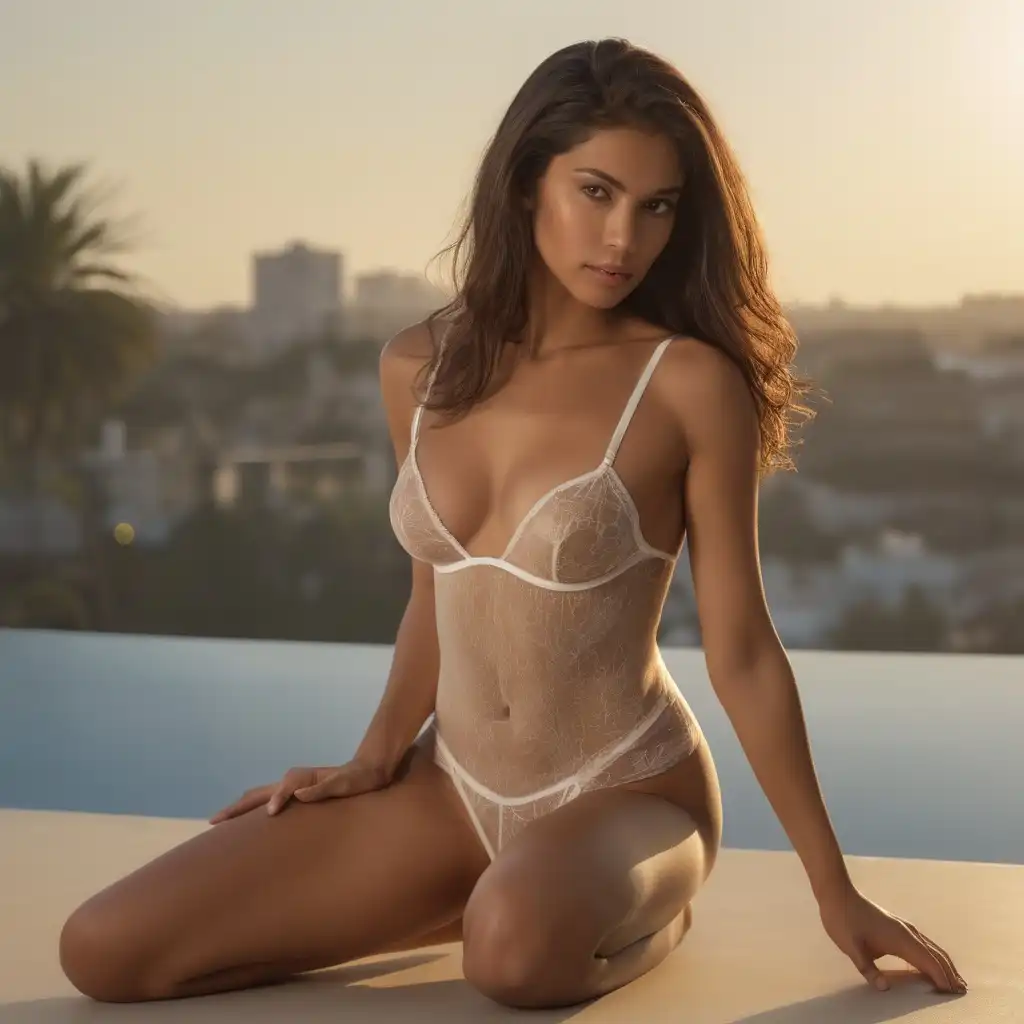
This AI-generated model demonstrates the photorealistic quality achievable with modern synthetic model technology. Perfect for fitness and lingerie brand campaigns.
The Technology Behind AI Models
Understanding the technology that powers AI models helps brands make informed decisions about implementation and sets realistic expectations for capabilities and limitations.
Generative Adversarial Networks (GANs)
Most AI models are created using GANs, a machine learning architecture where two neural networks compete against each other. One network generates images while the other evaluates their authenticity, resulting in increasingly realistic synthetic humans.
Key Technologies
Image Generation
- StyleGAN for high-resolution faces
- Full-body generation algorithms
- Pose and expression control
- Clothing and accessory mapping
Enhancement Features
- Real-time rendering capabilities
- Customizable physical attributes
- Background and environment control
- Lighting and photography effects
Modern AI model generators can produce images indistinguishable from photographs, with control over every aspect from facial features and body proportions to clothing, poses, and environmental settings.
Benefits for Brands and Marketers
The adoption of AI models in lingerie and fitness marketing offers compelling advantages that go beyond simple cost savings. These benefits are reshaping how brands approach content creation, audience engagement, and market positioning.
Cost Efficiency
- • Eliminate model fees and agency commissions
- • Reduce photoshoot production costs by up to 80%
- • No travel, accommodation, or catering expenses
- • Unlimited usage rights without residual payments
Creative Freedom
- • Perfect brand alignment without personality conflicts
- • Instant modifications and variations
- • Complete control over image rights
- • No scheduling limitations or availability issues
Scalability and Global Reach
AI models enable brands to create localized content for different markets without the complexity of managing multiple human influencers. A single AI model can be adapted to reflect different cultural preferences, body standards, and fashion sensibilities across various geographic regions.
ROI Advantages
Brands report an average 250% improvement in content creation ROI when incorporating AI models, with some seeing payback on their investment within the first quarter of implementation.
Challenges and Ethical Considerations
While AI models offer significant advantages, their implementation in lingerie and fitness marketing raises important questions about authenticity, representation, and consumer trust that brands must carefully navigate.
Transparency and Disclosure
Industry best practices increasingly require clear disclosure when AI models are used in marketing materials. Consumers have a right to know when they're viewing synthetic rather than human models, particularly in industries that trade on aspirational imagery.
Key Ethical Considerations
Unrealistic Beauty Standards
AI models may perpetuate or amplify unrealistic beauty ideals if not carefully designed with diversity and authenticity in mind.
Impact on Human Models
The rise of AI models could potentially reduce opportunities for human models, particularly in certain market segments.
Consumer Trust
Failure to disclose AI usage can damage brand credibility when consumers discover the truth independently.
Technical Limitations
Despite rapid advances in AI technology, certain limitations still exist. AI models may struggle with complex poses, detailed hand positions, or highly specific product interactions. Understanding these limitations helps brands set appropriate expectations and plan complementary content strategies.
Success Stories and Case Studies
Several forward-thinking brands have successfully integrated AI models into their marketing strategies, demonstrating the practical applications and measurable benefits of this technology.
Lingerie Brand Case Study
A mid-sized lingerie brand implemented AI models to showcase their size-inclusive range across 12 different body types simultaneously. The campaign resulted in a 40% increase in engagement and a 25% boost in sales across previously underrepresented size categories.
Fitness Equipment Company
A fitness equipment manufacturer created an AI fitness influencer to demonstrate proper equipment usage. The virtual trainer provided consistent, accurate demonstrations across multiple languages and cultural contexts, supporting global expansion efforts.
Sportswear Startup
A startup sportswear brand used AI models to create their entire launch campaign, enabling them to compete with established brands despite limited budgets. The AI models helped maintain visual consistency across all marketing materials while reducing production costs by 75%.
Future Trends and Predictions
The future of AI models in lingerie and fitness marketing promises even more sophisticated capabilities and wider adoption across the industry.
Emerging Technologies
Real-time Interaction
Future AI models will offer real-time interaction capabilities, allowing customers to chat with AI fitness trainers or receive personalized lingerie recommendations from AI consultants.
Advanced Personalization
AI models will adapt their appearance and messaging based on individual customer preferences, creating highly personalized shopping experiences.
Industry Predictions
- 📈 2025: 60% of fashion brands will incorporate AI models in their marketing mix
- 🎯 2026: AI influencers will command premium rates comparable to top human influencers
- 🌐 2027: Virtual try-on experiences with AI models will become standard e-commerce features
- 🤖 2028: AI models will offer real-time personalized fitness coaching and styling advice
Implementation Guide for Brands
Successfully implementing AI models requires careful planning, appropriate technology selection, and clear processes for content creation and brand management.
Step-by-Step Implementation
Define Your AI Model Strategy
Determine how AI models fit into your overall marketing strategy, target audience, and brand positioning. Consider whether you need a single brand ambassador or multiple models for different segments.
Select Technology Partners
Research AI model generation platforms, considering factors like image quality, customization options, licensing terms, and integration capabilities with your existing marketing tools.
Develop Brand Guidelines
Create detailed specifications for your AI model's appearance, personality, and behavior. Include guidelines for poses, expressions, styling, and brand voice to ensure consistency across all content.
Create Content Workflows
Establish processes for content creation, review, and approval. Include disclosure requirements and quality control measures to maintain brand standards and regulatory compliance.
Launch and Monitor
Begin with a limited campaign to test audience response and gather feedback. Monitor performance metrics, engagement rates, and customer sentiment to optimize your AI model strategy.
Best Practices
- Always disclose the use of AI models in marketing materials
- Maintain realistic and diverse representations
- Regular quality audits to ensure brand alignment
- Stay updated on industry regulations and guidelines
- Collect and respond to customer feedback
Conclusion
AI models are transforming the lingerie and fitness industries by offering unprecedented control, consistency, and creative possibilities for brand marketing. While challenges around transparency and authenticity remain, the benefits of cost efficiency, scalability, and creative freedom make AI models an increasingly attractive option for forward-thinking brands.
Success with AI models requires careful planning, ethical considerations, and clear communication with consumers. Brands that embrace this technology while maintaining transparency and authentic brand values will be best positioned to capitalize on the opportunities it presents.
Ready to Explore AI Models for Your Brand?
Discover how AI-generated models can transform your marketing strategy and create compelling, consistent brand experiences.
Explore Our Gallery